I often hear friends say that when they wake up in the morning, they measure the TDS value of the water from their purifier and don't drink the first few glasses...
So, is it really safe to drink the ‘overnight water’ from a purifier?
The truth might surprise you!
Waking up bleary-eyed, you shuffle over to the water purifier and pour your first cup of water.
At this moment, I reckon you should snap wide awake. Have you ever considered how this cup differs from the water you usually drink?
Today, we'll delve into a topic seldom discussed openly within the water purifier industry—the issue of stale water.
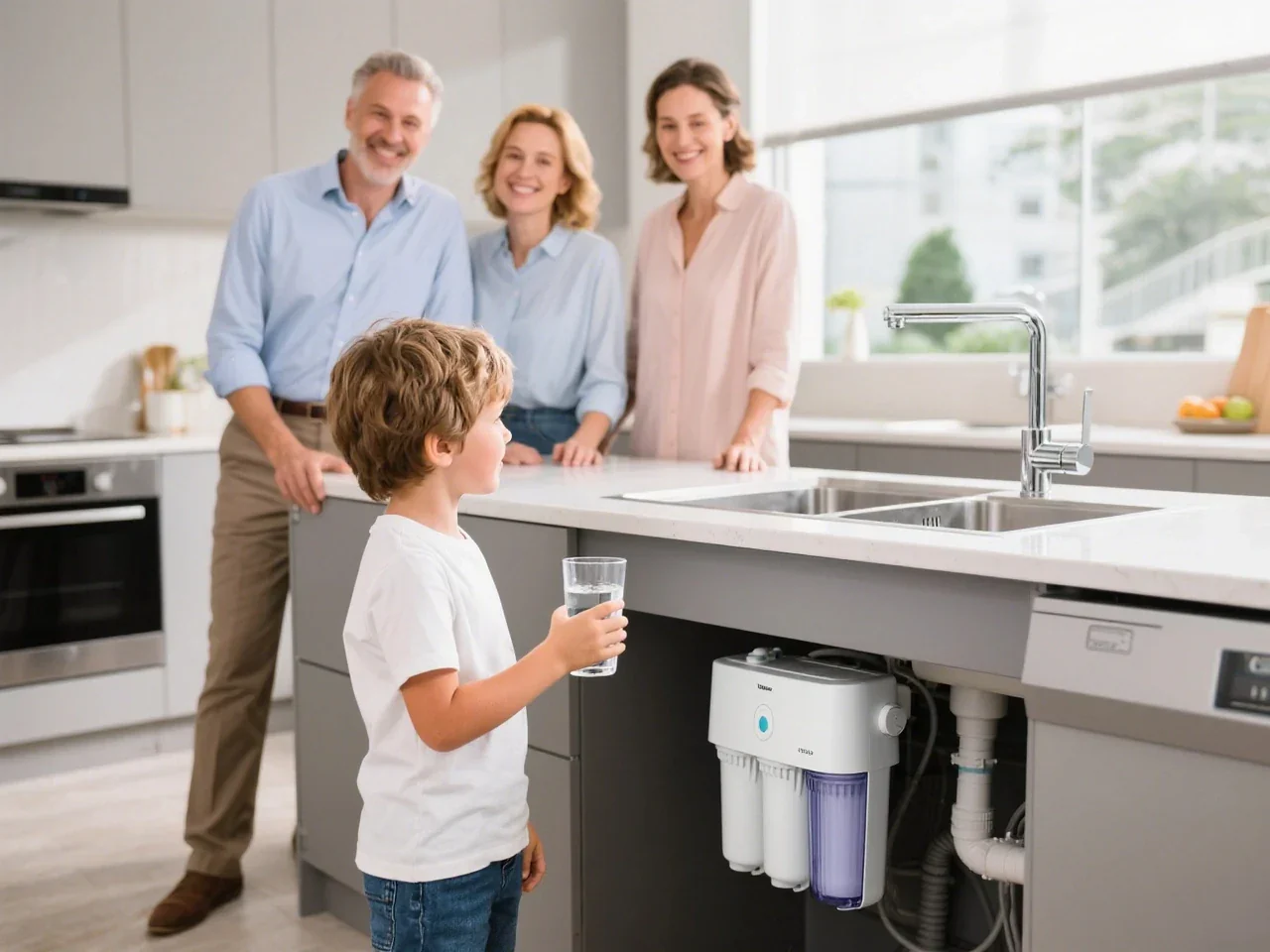
What exactly is stale water?How does it form?Consider brewing tea: when leaves steep too long, the liquor grows increasingly potent. A similar phenomenon occurs within water purifiers.
When the purifier ceases operation, high-concentration water upstream of the reverse osmosis (RO) membrane gradually permeates into the purified water reservoir. Much like overnight tea, this causes the purified water to become ‘less pure’.
This is what we refer to as ‘stale water’.
What factors exacerbate the stale water issue?
1. Is your household water hard?
Harder water contains more calcium and magnesium ions, making the stale water problem more pronounced.
For instance, water in northern regions like Beijing, Hebei, and Shanxi is typically harder than in the south, leading to more frequent encounters with stale water issues among users in these areas.
2. Does your water purifier have a high flow rate?
The market now favours high-flow purifiers rated at 1000G, 1200G, or even 1600G, with many retailers successfully creating a “flow anxiety” among consumers.
They fear you'll find the flow rate too slow and grow impatient waiting for water. Yet, they won't mention that while a higher RO membrane flow rate increases water output speed, it also makes the stale water phenomenon more pronounced.
To illustrate simply: it's akin to a large-diameter water pipe—when water ceases flowing, more residual water remains.
3. How long has the purifier been inactive?
Downtime correlates directly with stagnant water volume—
The longer it sits idle, the more stale water accumulates.
After overnight inactivity, the first cup drawn the next morning is typically ‘stale water’.Alternatively, multiple factors may converge—
Suppose you reside in a northern region with hard water, favour the aesthetics of high-flow models for instant filtration and drinking without a storage tank, and the unit has been idle overnight. In that case, the first several glasses drawn upon waking may all be ‘stale water’.
Hence, we revisit an often-overlooked classic design: the small-gallon water purifier, specifically the low-flow model with a pressurised storage tank.
Amidst today's pursuit of high flow rates, traditional small-gallon filters (such as 50G, 75G, 100G) offer distinct advantages:
Firstly, they utilise low-flow RO membranes. Water passes through the unit slowly, allowing extended contact time with filter media across all stages, ensuring thorough pre-treatment.
Secondly, the pressurised storage tank design acts as a natural buffer, using a tankful of purified water to neutralise water quality, significantly mitigating the issue of stagnant water.
Thirdly, filter cartridge costs are more affordable. For low-flow models with pressurised tanks, annual filter expenses typically amount to just over a hundred or two hundred pounds.
So, how can the stagnant water issue be addressed?
Method One: Intelligent Screening
Some high-end purifiers incorporate TDS monitoring systems that automatically detect and discharge stagnant water until quality meets standards before supplying it to users.
Naturally, this principle allows retrofitting larger-flow models with an intelligent water quality screener and pressure tank.
Method Two: Manual Flushing
Each morning when using the purifier, first open the tap and let water run for 10-20 seconds (adjust duration based on local water quality). This effectively flushes out most stagnant water.
Method Three: Replacing Equipment
Select a water purifier that genuinely resolves the stagnant water issue, eliminating the problem at its source.
Special note: Pipeline machine users beware! If the water quality from your purifier fails to meet standards, it may contaminate the pipeline machine. In such cases, it would be better not to install the pipeline machine at all.
If your household uses a high-flow water purifier alongside a pipeline machine, the issue of stagnant water may be even more severe, meaning every glass of water you drink could potentially be stale!
Furthermore, when the pipeline machine heats water, it accelerates the scaling caused by calcium and magnesium ions, leading to a significant increase in malfunction rates.
If you reside in an area with hard water, we recommend:
1. Exercise caution when using pipeline machines
2. Prioritise selecting water purifiers equipped with pressure tanks
Finally, addressing the most pressing question:Is stagnant water safe to drink?
In most regions, stagnant water is drinkable. It primarily contains calcium and magnesium ions, which pose no harm to human health.
However, its taste may resemble tap water, lacking the same sweetness.
In certain circumstances—such as poor water quality, chemical contaminants, heavy metals, or filters employing questionable technological additives—the resulting ‘stagnant water’ is not recommended for consumption.
Having uncovered the truth about aged water, might this prompt you to reconsider your home water purifier choices and usage? Do share your thoughts in the comments!
Naturally, while this piece draws from my years of experience and has been written with utmost care, I hope it proves helpful.
Yet, as everyone's understanding differs, please treat this as guidance only. Your final choice should align with local water conditions and your specific needs – after all, satisfaction comes at no price.