
The global smart bathroom market size reached USD 3.1 Billion in 2024. Looking forward, the market is forecast to reach USD 5.9 Billion by 2033, exhibiting a growth rate (CAGR) of 7.05% during 2025-2033. Rapid technological advancements, heightened consumer awareness and preferences for hygiene and convenience, increasing urbanization trends, and a growing emphasis on energy efficiency and sustainability across residential and non-residential sectors are key factors propelling the market growth.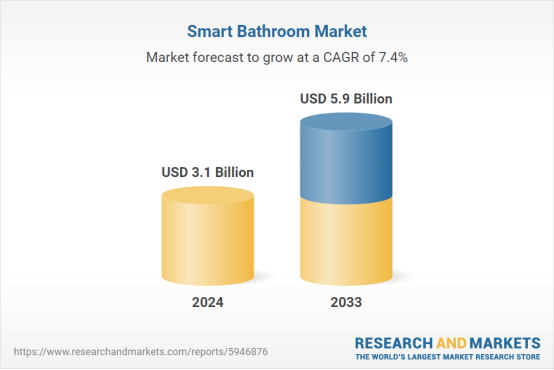
One of the primary factors propelling the global smart bathroom market is the continuous evolution of technology. Rapid advancements in sensors, connectivity, and automation have enabled the integration of smart solutions into bathroom fixtures and accessories. Smart toilets, faucets, mirrors, and showers equipped with sensors and connectivity features are becoming increasingly popular, promoting hygiene and reducing the risk of bacterial transmission. Additionally, the integration of voice and gesture controls in smart bathroom devices enhances user convenience and provides a futuristic and interactive experience, creating a positive outlook for market expansion. Apart from this, the IoT plays a crucial role in connecting various bathroom components, allowing users to monitor and control them remotely through smartphones or other smart devices, which is further bolstering the market growth.
The escalating awareness among consumers regarding the benefits of smart bathroom solutions is a significant driver for the market growth. Consumers are becoming more conscious of health and hygiene, and smart bathroom products align with these concerns. The rising demand for features like self-cleaning toilets, automated soap dispensers, and water-saving technologies as consumers seek convenience and sustainability in their daily routines is aiding in market expansion. Moreover, the aesthetic appeal of smart bathroom products and the ability to customize and personalize the bathroom environment are providing an impetus to the market growth. In line with this, the increasing consumer willingness to invest in smart fixtures and accessories that enhance functionality and add a touch of luxury to their homes is driving market expansion.
Global urbanization trends are playing a pivotal role in the growth of the smart bathroom market. As more people move to urban areas, the demand for compact and efficient living spaces has increased. Smart bathroom solutions, with their space-saving designs and multifunctional features, are well-suited for urban living. Compact smart toilets with integrated bidets, space-saving vanities with built-in storage solutions, and modular shower systems cater to the spatial constraints of urban dwellings. Besides this, the time efficiency offered by smart bathroom technologies, such as pre-set water temperature, personalized user profiles, and quick-response sensors aligns with the fast-paced lifestyles of urban consumers, contributing to the market growth.
The global focus on environmental sustainability and energy efficiency has led to a growing demand for eco-friendly solutions in various industries, including home appliances. The rising emphasis on water conservation and energy-efficient technologies is fueling the demand for smart bathroom solutions, such as smart toilets with dual-flush mechanisms, sensor-based faucets that control water flow, and shower systems with programmable water usage. Furthermore, the integration of energy-efficient lighting, such as light-emitting diode (LED) mirrors and smart lighting controls, helps reduce electricity consumption. Consequently, the increasing consumer preference for products that align with their commitment to sustainable living is presenting lucrative opportunities for market expansion.
This report provides an analysis of the key trends in each segment of the market, along with forecasts at the global and regional levels for 2025-2033. The report has categorized the market based on product, distribution channel and end-use industry.
Touchless faucets accounts for the majority of the market share
The report has provided a detailed breakup and analysis of the market based on the product. This includes touchless faucets, smart toilets, touchless soap dispenser, touchless cisterns, hand dryers, smart windows, and others. According to the report, touchless faucets represented the largest segment.
The burgeoning demand for touchless faucets in smart bathrooms is primarily fueled by the heightened emphasis on hygiene and sanitation. These faucets offer a hands-free and contactless experience, reducing the risk of bacterial transmission and enhancing user confidence in public and private spaces. Concurrently, the ongoing global focus on health and cleanliness, especially in the wake of health crises, has heightened the adoption of touchless technologies, strengthening the market growth. Besides this, consumers are increasingly valuing the convenience and safety provided by touchless faucets, making them a sought-after feature in modern bathrooms.
The demand for smart toilets is driven by features like automated bidet functions, self-cleaning capabilities, and personalized settings, providing users with enhanced comfort and hygiene in the bathroom.
In line with this, the rising demand for touchless soap dispensers owing to the increasing focus on hand hygiene is propelling the market growth. These devices offer a hands-free and convenient solution for efficient and sanitary handwashing practices.
Moreover, the increasing utilization of touchless cisterns for water conservation by allowing users to flush without physical contact, thereby aligning with sustainability goals is impelling the market growth.
Along with this, smart hand dryers are gaining traction due to their energy-efficient designs that provide quick and touchless drying, minimize paper waste, and promote eco-friendly practices in public and private spaces.
Additionally, the expanding demand for smart windows in bathrooms fueled by the desire for privacy, natural light optimization, and energy efficiency is acting as another significant growth-inducing factor.
Apart from this, ongoing innovations in smart bathroom products, such as smart mirrors, water-saving sensors, and personalized lighting controls, catering to diverse consumer preferences, adding versatility and customization to the modern bathroom experience are bolstering the overall market growth.
In contrast, the surge in demand for smart bathroom products through online distribution channels is mainly driven by the convenience and accessibility they offer to consumers. Online platforms provide a vast array of options, enabling customers to explore and compare a diverse range of smart bathroom solutions from the comfort of their homes. Furthermore, the availability of detailed product information, user reviews, and convenient delivery options further enhances the online shopping experience, making it an attractive choice for tech-savvy consumers seeking efficiency and a seamless purchasing process.
The demand for smart bathroom solutions in the non-residential sector is impelled by the rising emphasis on enhanced hygiene, efficiency, and resource management. In commercial spaces, such as offices, hotels, and public facilities, the integration of touchless faucets, smart toilets, and energy-efficient hand dryers aligns with the growing need for a sanitary and user-friendly environment. Additionally, the appeal of modern and technologically advanced bathrooms contributes to the overall experience for patrons and employees in non-residential settings, fostering a positive and innovative image for businesses.
On the other hand, the burgeoning demand for smart bathroom solutions in the residential sector is fueled by the increasing desire for convenience, luxury, and personalized home experiences. Homeowners are drawn to the practical benefits of features such as touchless faucets, smart toilets, and automated soap dispensers that enhance daily routines. Besides this, the integration of these technologies also aligns with the contemporary lifestyle preferences of homeowners seeking innovative and connected solutions within their living spaces, influencing the market growth.


