Should you buy a water purifier? We should all choose based on actual scenarios and needs, rather than blindly following others' experiences.
Many people are torn about whether to install a water purifier at home. Sometimes, advertisements claim that tap water contains countless tiny particles and impurities invisible to the naked eye, painting a picture that makes people feel anxious. As a result, they suddenly feel that not having a water purifier is like drinking dirty water every day, and some people even go ahead and make a purchase on the spot. Others might advise you not to fall for such marketing tactics, arguing that tap water undergoes rigorous testing before reaching your home, and spending extra money on a water purifier is simply a waste. Due to the prevalence of such opinions, people often find themselves in a state of confusion, caught between the allure of the product and the uncertainty of its necessity. Thus, the question becomes: Is a water purifier truly essential, or is it merely a marketing gimmick?
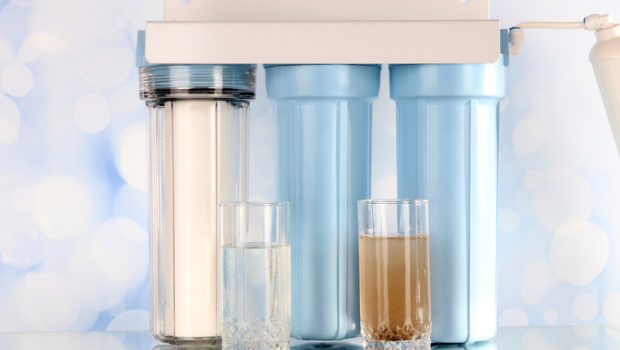
If we were to make a definitive statement, it would be overly biased, as environmental differences are significant, and water quality varies greatly between cities. In some areas, water treatment plants frequently update their equipment and enforce strict testing standards, resulting in tap water that tastes fresh when you turn on the tap. Using it to rinse fruits or drink directly poses no obvious issues. However, in other areas, aging water pipes may carry rust, sand, or even an odd odour during transportation. Insisting that a water purifier is unnecessary in such cases would be compromising your health. In other words, a water purifier is not a waste of money, but it definitely needs to be considered based on local conditions.
People who consider installing a water purifier at home often do so for a few small reasons, such as the white residue left on the bottom of a pot after boiling, which is actually calcium and magnesium ions. Some people notice that tea stains form quickly after boiling water, indicating high water hardness. Others complain about suspended particles in milk when brewing it, which look unpleasant. These phenomena do not pose an immediate health hazard, but the long-term experience is quite unpleasant, so it makes sense to find a way to address them. Water purifiers can indeed filter out some suspended particles, heavy metals, and residual chlorine, significantly improving the taste and making the water smoother and more natural to drink. This subtle sensory experience often speaks louder than any advertising description.
However, market chaos is an objective reality. A quick glance reveals a wide array of products with varying specifications and prices—some costing thousands of pounds with reverse osmosis filters, others a few hundred pounds with simple activated carbon filters, and still others more expensive models claiming to have smart sensors and automatic filter replacement reminders. When overwhelmed by relentless marketing, it’s easy to give up on comparisons and follow the salesperson’s lead, but this is precisely where one is most likely to pay the “stupidity tax.” Here's a special reminder: the lifespan of the filter cartridge determines the subsequent costs. If you buy a cheap machine that requires replacing the filter every three months and contacting after-sales service for installation, the cumulative costs may end up being higher than buying a high-end machine directly. Therefore, never make a hasty decision based solely on the initial price.
If you truly wish to purchase a machine, first research the water quality in your area. Many cities now publish annual reports, so you can search for data on residual chlorine levels, turbidity, etc., and then make a decision based on your lifestyle habits. If you typically boil water before drinking and are accustomed to using bottled mineral water, with low demand for direct drinking water, a compact pre-filter model may suffice. However, if your household is large and frequently cooks meals, makes soup, or brews coffee at home, requiring a significant amount of clean, smooth-tasting water for daily use, investing in a more stable, larger-capacity model with a reverse osmosis (RO) membrane system may be more appropriate. Ultimately, the key is to select based on your actual needs rather than blindly following others' experiences.
We also need to talk about the pain point of daily maintenance, because simply installing the machine does not mean that everything will be fine from then on. If you are too lazy to replace the filter cartridge and have not renovated it for two or three years, it is equivalent to accumulating a breeding ground for bacteria at home, which not only fails to protect you but is even worse. Therefore, it is very important to understand the maintenance rules. You can set a reminder on your mobile phone or stick a sticky note on the refrigerator and mark the date each time you replace it for easy reference. Some manufacturers offer monitoring apps, not to show off their cutting-edge technology, but to help users avoid forgetting this tedious task.

Another point to note is the psychological gap. Many people, shortly after purchasing a product, expect to immediately notice a difference in taste, and if they don't, they begin to doubt whether they were deceived. In reality, improvements are usually subtle and not immediately noticeable. As your experience accumulates, for example, when you notice the tea has a pure and clear colour, the rice has a rich aroma, or there are no more stubborn stains in the pot, you will realise that the changes are subtly influencing the small details of your life. This feeling is slow but real, so it is important to have the right mindset and avoid falling into the trap of extreme expectations.
Some people like to label all consumption upgrades as ‘intelligence tax,’ but ultimately, many choices are made to enhance comfort and peace of mind, just like some people buy air purifiers or add dryers—the essence is the pursuit of quality of life. If everyone were to remain at the minimum subsistence level, eating just enough to survive and drinking plain water, then there would be no need to buy any appliances at all. However, the process of consumption upgrading driven by societal development is inherently about gradually improving the quality of life. Of course, this process inevitably includes exaggerated or misleading marketing claims and a mix of reputable and questionable brands in the market. But this should not lead to the entire industry being unfairly labelled as a scam. The truly wise approach is to avoid following trends or rejecting options outright, but instead to make informed decisions based on family needs after thoroughly understanding the pros and cons.
In summary, a water purifier is indeed a small appliance worth serious consideration—not something to be casually discarded or blindly idolised. If your environment allows for it, sensitive to dietary experiences, and if there are flaws in the tap water quality, then choosing the right equipment is entirely reasonable. It is neither a frivolous toy nor an object of collective ridicule for ‘paying a tax on intelligence.’ As long as you maintain rational consumption, it can quietly improve many minor details, reducing some of our subconscious concerns. When faced with such products, instead of hesitating and getting caught up in debates, it is better to carefully assess your daily needs, trust your judgment, select the appropriate model, and maintain it properly. Only then can it truly deliver value, while also providing the reassurance and happiness derived from a simple yet clean, refreshing glass of water.